How
Indoor Secondhand Smoke Impacts Your Family
Secondhand smoke (SHS) is also known as Environmental
Tobacco Smoke. SHS includes both exhaled and sidestream smoke. Secondhand smoke contains
more than 4,000 substances, including over 40 that are linked to cancer.
How Does SHS Relate To Asthma?
SHS may trigger asthma episodes and make asthma symptoms more severe in children who
already have asthma. Moreover, it is a risk factor for new cases of asthma in children who
have not previously exhibited asthma symptoms.
The means by which SHS triggers an asthma episode is believed to be through its
irritancy effects. That is, it irritates the chronically inflamed bronchial passages of
asthmatics. This is a different pathway from most of the other environmental triggers of
asthma, like dust mites and pet dander, which trigger asthma episodes through allergenic
effects.
Exposure to it is also known to cause a variety of other negative health consequences,
including lung cancer, ear infections in children, and respiratory illnesses.
Many of the health effects of SHS (including asthma) are most clearly manifested in
children. This is because children are particularly vulnerable to SHS. This is likely due
to several factors, including the fact that children are still developing physically, have
higher breathing rates than adults, and have little control over their indoor
environments. Children receiving high doses of SHS, such as those with smoking mothers,
run the greatest relative risk of experiencing damaging health effects.
Actions You Can Take
- Choose not to use cigarettes or cigars in your home or car and do not permit others to
do so either.
- Choose not to use cigarettes or cigars in the presence of asthmatics.
- Choose not to use cigarettes or cigars in the presence of children, who are particularly
susceptible to the effects of SHS.
- Do not allow babysitters or others who work in your home to use cigarettes or cigars in
the house or near your children.
Secondhand Smoke
Which Unit Do You Need? Do You Need?
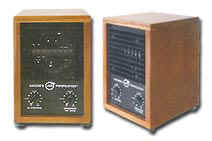 |
Try the
LightningAir for your home or office.
Never put up with
secondhand smoke again! |
Shop & reduce secondhand smoke here
Air Cleaning
The three most common approaches to reducing indoor
air pollution are:
Source Control: Eliminate. reduce or control the
sources of pollution; although it is difficult to force pets outdoors, stop people from
using cigarettes and cigars and eliminate all odors.
Ventilation: Dilute and exhaust pollutants through
outdoor air ventilation; in the winter however, venting to the outdoors may increase
heating and energy costs.
Air Cleaning: Remove pollutants and secondhand smoke
through proven air cleaning methods and products.
The first approach -- source control -- involves
minimizing the use of products and materials that cause indoor pollution including
secondhand smoke, employing good hygiene practices to minimize biological contaminants
(including the control of humidity and moisture, and occasional cleaning and disinfection
of wet or moist surfaces), and using good housekeeping practices to control particles.
The second approach -- outdoor air ventilation -- is
also effective and commonly employed. Ventilation methods include installing an exhaust
fan close to the source of contaminants, increasing outdoor air flows in mechanical
ventilation systems, and opening windows, especially when pollutant sources are in use.
The third approach -- air cleaning -- the best
method is used to supplement source control and ventilation. Air filters, electronic
particle air cleaners and ionizers are often used to remove airborne particles, and gas
adsorbing material is sometimes used to remove gaseous contaminants when source control
and ventilation are inadequate.
|